The Three-Step Routine
The steps work on any story, in any genre, at any length.
- Step 1: Find the central character. The conflict belongs to whoever the story follows. This character is also called the protagonist, and it may be a person, an animal, or an imagined being.
- Step 2: Name the opposing force. Say it out loud in your own words before you reach for a label. The wildfire. The autopilot. Her own guilt. This force is also called the antagonist and it does not have to be a person or a villain.
- Step 3: Decide whether the force is internal or external. Internal means the struggle happens inside the character. External means the force sits outside them. This single sort cuts your six options down to one or five.
The Six Types
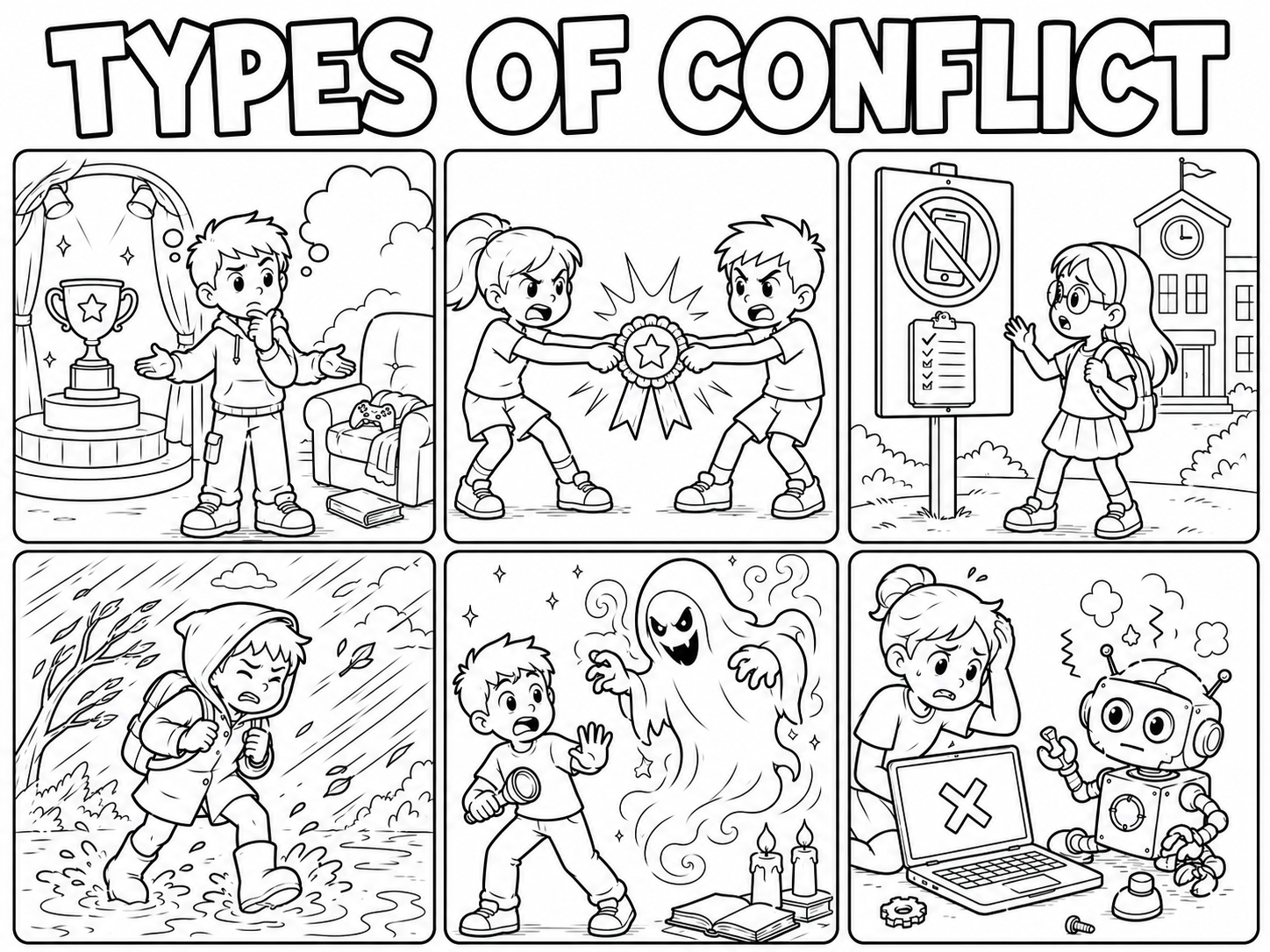
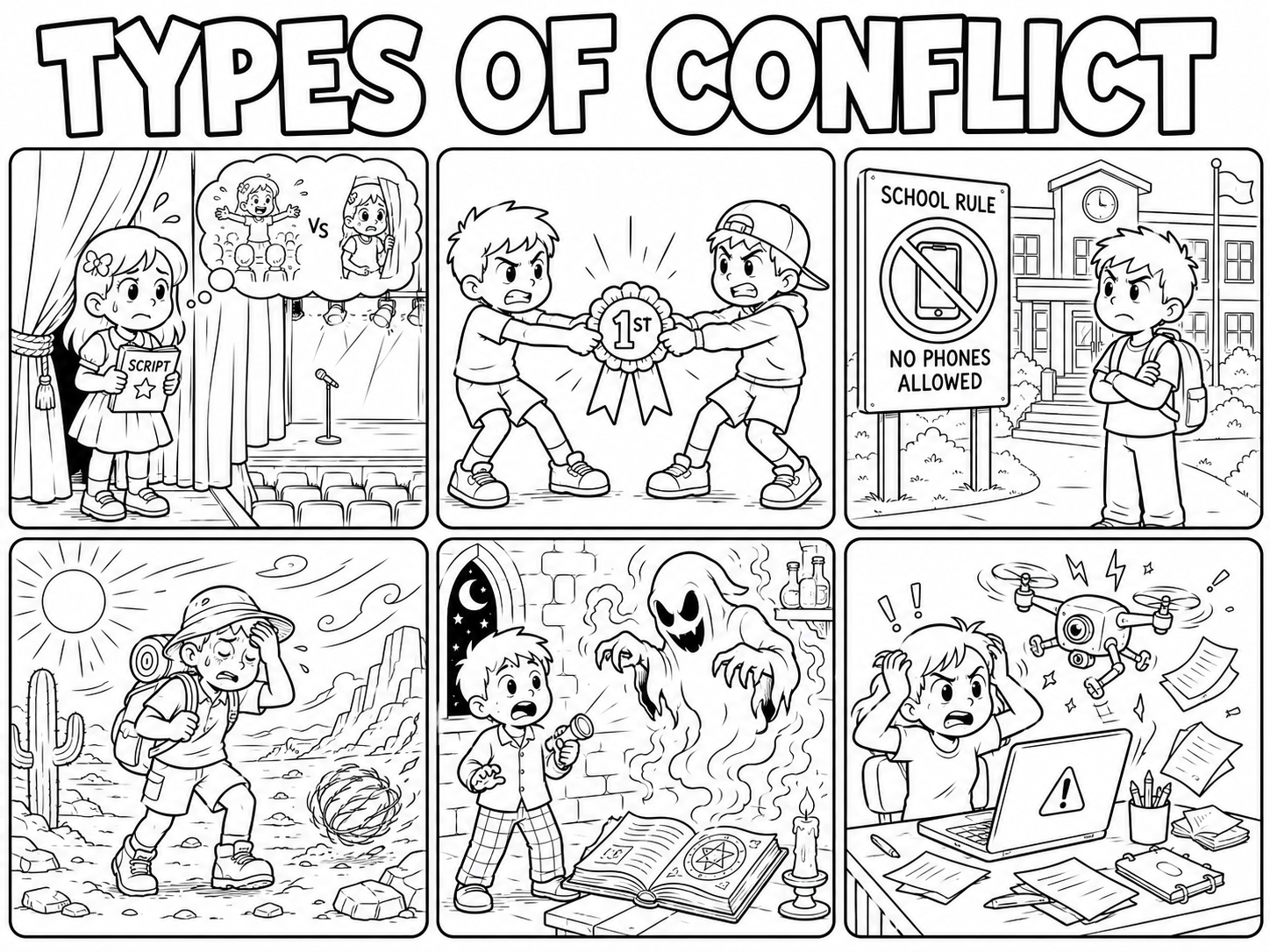
Once you have named the force, match it to one of six labels. In each label, person means the central character, even when that character is an animal or an imagined being. Only the first one on this list is internal.
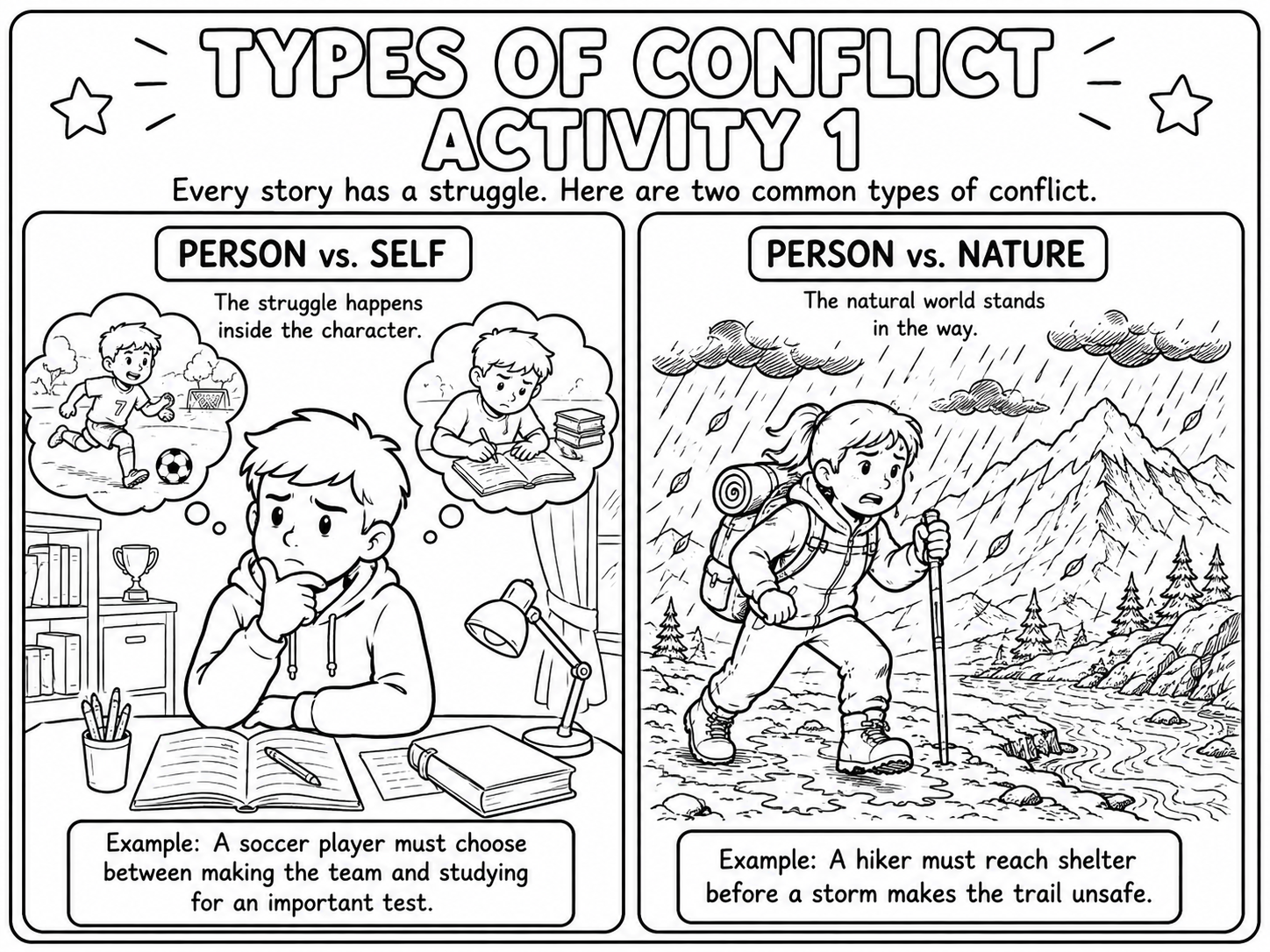
- Person vs. Self: two wants, beliefs, or fears pull against each other inside one character. This is the only internal type. Feelings alone do not qualify... characters feel afraid, angry, and heartbroken during every kind of conflict. The test is whether the character is arguing with themselves.
- Person vs. Person: another character or group stands between the central character and the goal. An antagonist is not the same as a villain. A best friend competing for the same spot, a loving parent, or a mentor can all oppose without meaning any harm. Opposition is structural, not moral.
- Person vs. Society: a law, rule, institution, custom, or shared expectation blocks the character. Society means opposition held by many people and backed by rules or tradition. One unfair boss acting alone is person vs. person.
- Person vs. Nature: the natural world stands in the way. Nature is not only weather... animals, terrain, distance, illness, thirst, hunger, barren ground, and even a character's own injured body all count. Nature has no intent and does not need any. Indifference blocks a goal as effectively as malice does.
- Person vs. Supernatural: the opposing force could not exist under the rules of the real world. The test is plausibility, not spookiness. A wolf stalking a cabin is nature. A wolf that speaks Latin is supernatural.
- Person vs. Technology: a machine, tool, or engineered system creates the obstacle. The machine needs no malice and no mind, and it may be working exactly as designed. What matters is whether the machine is the opponent or just the tool somebody else is holding.
The following resources will help students identify conflicts and types of conflicts in works of literature.