

Keep-Away
The lunch table had rules. Nobody ever wrote them down. Everybody just knew them.
Rule one: the last one to the table bought the fries. Rule two: nobody sat in Chase's seat. Rule three: you could never turn down a dare. And rule four, the big one: Chase could make a new rule any time he wanted.
Wes had been sitting at that table since September. He knew every rule by heart. He knew them because he was always the one they landed on.
Chase had given him a nickname too. Toolbox. It started because Wes worked Saturdays at his grandfather's repair shop. In about a week the whole grade was saying it, even kids who had never sat at their table. Wes laughed every time, like it was funny. He had gotten really good at laughing.
Devin laughed the loudest. Devin sat on Chase's right and repeated everything Chase said, one second later and a little louder. In all the months Wes had known him, Devin had never once said anything that Chase had not said first.
Nadia sat at the end of the table. She drew all the time, mostly people, and she was quick, so when Chase aimed a joke at her she usually had one ready to fire back. She also kept her sketchbook zipped inside her bag at that table, which she never did anywhere else in the whole building. Once, in the hall, she stopped Wes and said, "You know Toolbox is not a compliment, right? They have one for me too." Wes told her it was just a joke. Nadia looked at him a second longer than she needed to. Then she let it go.
On Saturdays, Wes worked at his grandfather's shop on Delaney Street. It was a small store that smelled like solder and old paper.
Grandpa Miles was seventy-eight. He had huge, rough hands and he kept every screw he had ever acquired in coffee cans on a shelf above the workbench. He never rushed. He never raised his voice. When Wes asked him a question, Grandpa Miles usually waited a long time before he answered.
That fall, Grandpa Miles let Wes build a radio out of the parts bin. It took six weeks. Wes cleaned every piece, soldered every wire, and sanded the wooden case by hand. When he finally plugged it in, music came out. Miles put down his coffee, listened for a whole minute, and said, "You built a good machine, Wes."
On Monday, Wes brought it to school.
He set it in the middle of the lunch table and turned it on. For about four seconds, it was the best thing that had ever happened to him.
Then Chase picked it up and held it over his head. "New rule," he said. "Toolbox has to earn it back."
He threw it to Devin. Devin threw it down the table. Wes went one way and then the other way, reaching, while everybody laughed. Then the radio crashed down on the tile floor and something inside it cracked.
Chase looked at it. "Relax, Toolbox," he said. "It was junk anyway."
And Wes laughed.
That was the part he kept thinking about later. Not the throwing. Not the crack. The laughing. Nobody made him do it. He did it himself, right on time with everybody else, while six weeks of work sat in pieces next to his shoe.
Wes was quiet at the shop that Saturday. He swept the same piece of floor twice. Grandpa Miles let him be quiet for about an hour. Then he set a coffee can on the bench between them and started sorting screws.
"Tell me about your friends," Grandpa Miles said.
So Wes told him. Not all of it. Enough of it.
Grandpa Miles sorted for a while without looking up. Then he said, "Do you know Sal?"
Wes did. Sal came by most Sundays, and the two of them argued about baseball for hours and loved every second of it.
Grandpa Miles looked at Wes for a long time and then said, "About fifty years back, my truck died out on Route 9 at two in the morning. Snow coming down sideways. I called four men that night. Four men I ate lunch with every single day." He dropped a screw in the can. "Not one of them picked up. But Sal... Sal drove three hours through that mess to help me out of that jam and he never said a word about it. Not that night. Not since."
Wes waited for the rest.
"Anybody can be good to you when it costs them nothing," Miles said. "You want to know who a person is? Watch what they do when it costs them something."
Then he handed Wes a screwdriver and that was the whole talk. They worked until six.
Wes thought about it Sunday. He thought about it on the bus Monday morning.
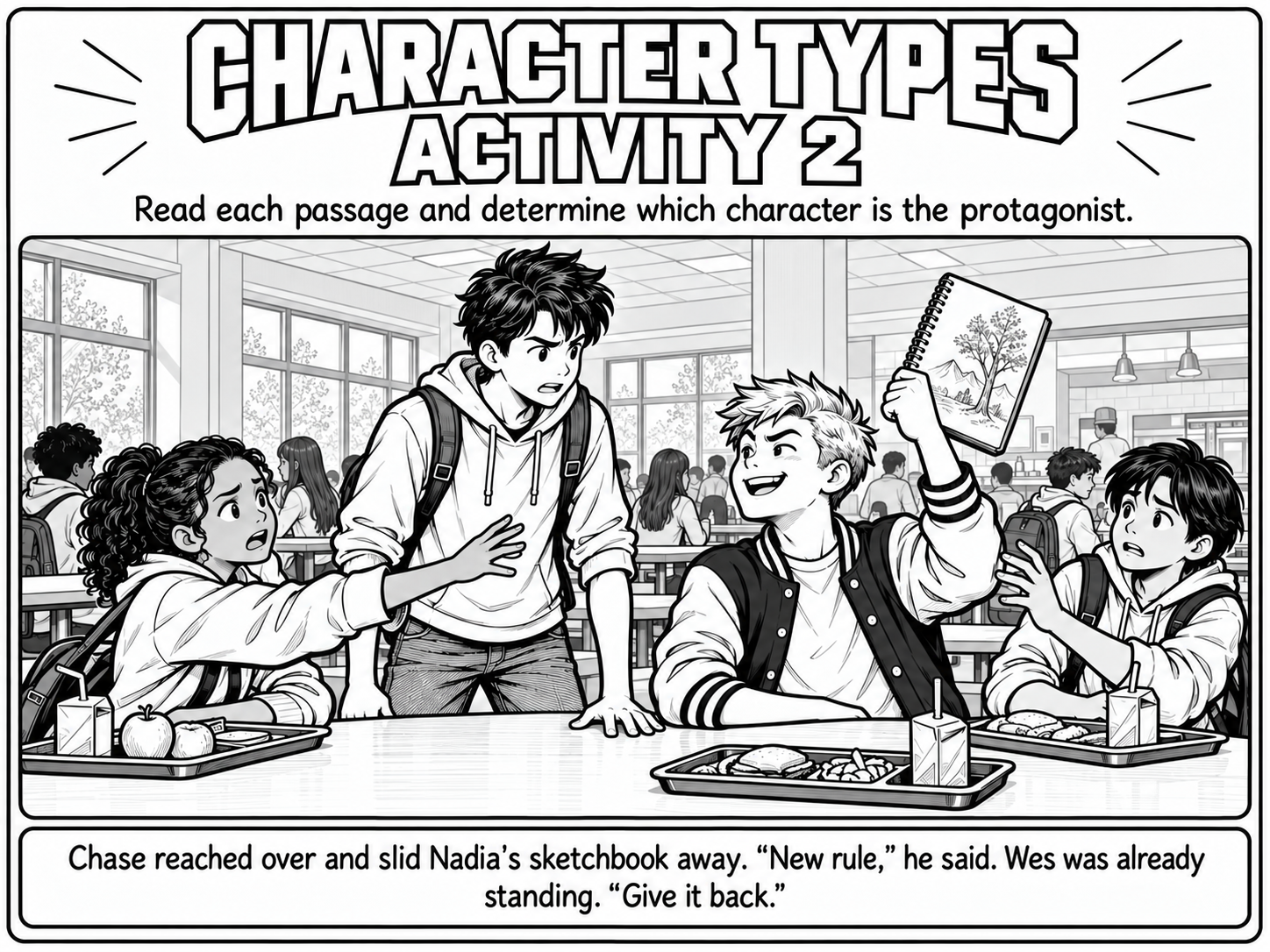
At lunch, Nadia had her sketchbook open. She was finishing something for art class. Chase reached over and slid it away from her.
"New rule," Chase said, holding it up where she could see it. "Nadia's drawings are public property." He tossed it to Devin.
Wes was already standing. He did not even remember deciding to stand and yet, he had risen. Then he spoke.
"Give it back."
The table went quiet. Devin sat there holding the sketchbook and looking at Chase.
Chase smiled the same smile he used for everything. "It is a joke, Toolbox. Why is everybody so sensitive?"
"My name is Wes."
He picked up his tray and walked away. As he neared the door he heard Chase behind him, already moving, already back out in front of it, "New rule. Nobody sits in Toolbox's seat." The table laughed right on time. Wes kept walking.
Nadia caught up with him at the doors. Devin trailed behind her, holding the sketchbook. He handed it to Nadia without saying anything about it. Then Devin said, "Your radio was good, Wes."
Chase had never said that. Nobody at that table had ever said anything like that. It seemed that perhaps Devin could express original thoughts.
The three of them sat on the cold concrete steps outside the gym. Nadia looked out at the parking lot. "I knew all of it," she said. "I have known since October. I just kept sitting there."
"Why?" Wes asked.
She shrugged. "Same reason you did."
Wes thought about the snow on Route 9 and four men who did not pick up the phone. Then he looked at the two people freezing on the steps beside him, and he knew exactly what he had.