Reading is one of the most important skills a student can develop. Once mastered, it opens doors to every other subject and stays with them for the rest of their lives. Strong readers think critically, make connections, and engage with the world around them in deeper, more meaningful ways.
The activities on this site are designed to help students build and sharpen essential reading skills through focused, interactive practice. Each activity features auto-grading and instant feedback, so students learn as they go and teachers save time. Activities are leveled to meet students where they are and challenge them to grow.
Skills We Cover
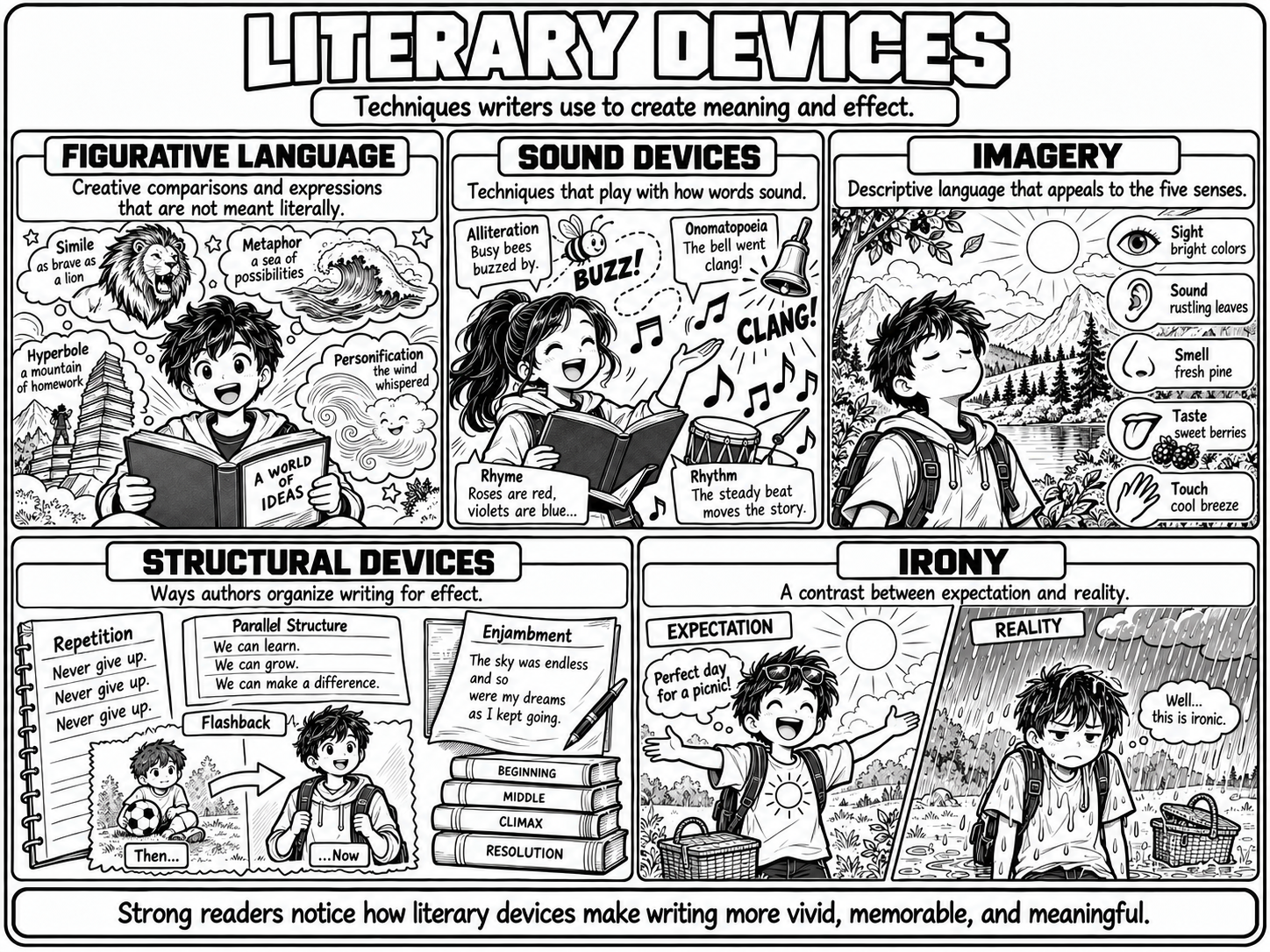
Literary Devices: Identify and analyze figurative language techniques like simile, metaphor, personification, hyperbole, and understatement.
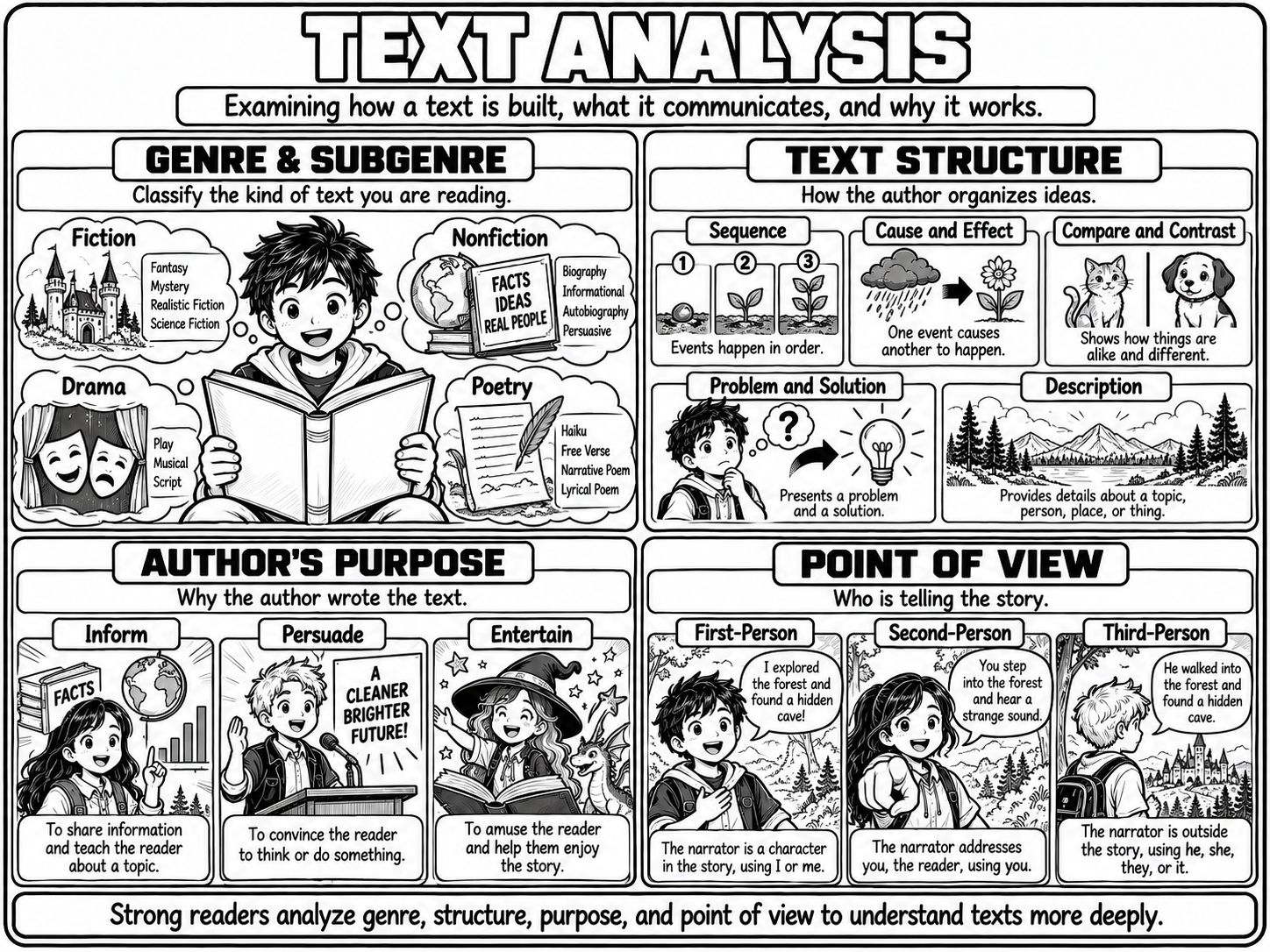
Point of View: Determine the narrator's perspective and understand how it shapes a story.
Genre: Recognize the features of fiction, nonfiction, poetry, drama, and their subgenres.
Text Structure: Identify how authors organize information using patterns like cause and effect, compare and contrast, sequence, problem and solution, and description.
Theme: Determine the central message or lesson of a text and support it with evidence.
Characterization: Analyze how authors reveal characters through their words, actions, thoughts, and interactions.
Making Inferences: Use clues from the text combined with prior knowledge to draw conclusions.
More skills and activities are added regularly. All activities are free, digital, and compatible with Google Classroom.
Categories
3 total
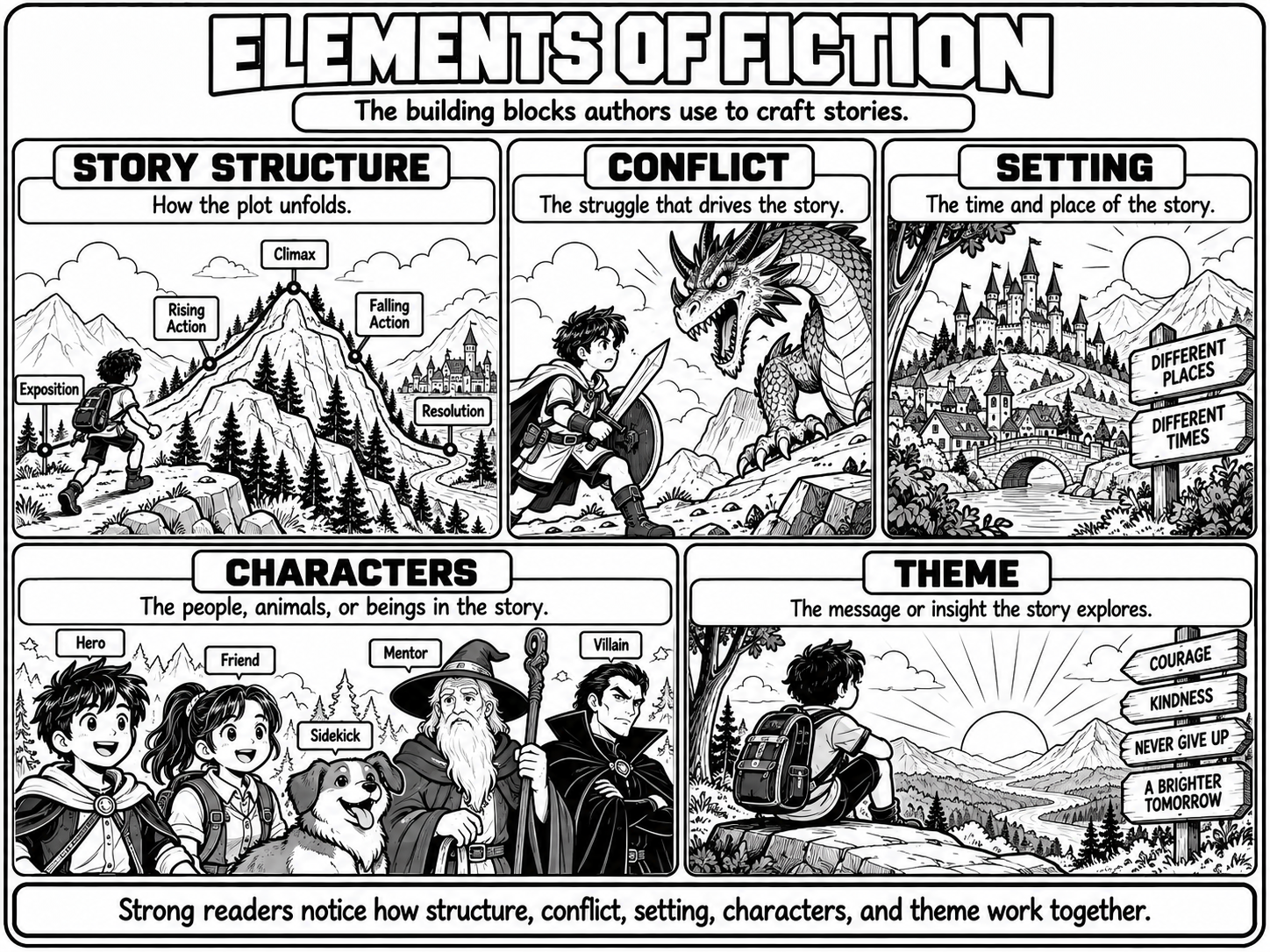
Elements of Fiction
Category
Every story is built from the same handful of pieces: a structure, a conflict, a setting, characters, and a theme. Learn to spot them and understand how they work together. Free auto-graded activities with Google Classroom integration.
Writers have a whole toolbox of tricks for making language jump off the page. Master figurative language and poetic devices with practice that builds real skill.
Strong readers don't just read what a text says; they figure out how and why it says it. Build the skills to analyze genre, structure, purpose, and point of view.


Discussion