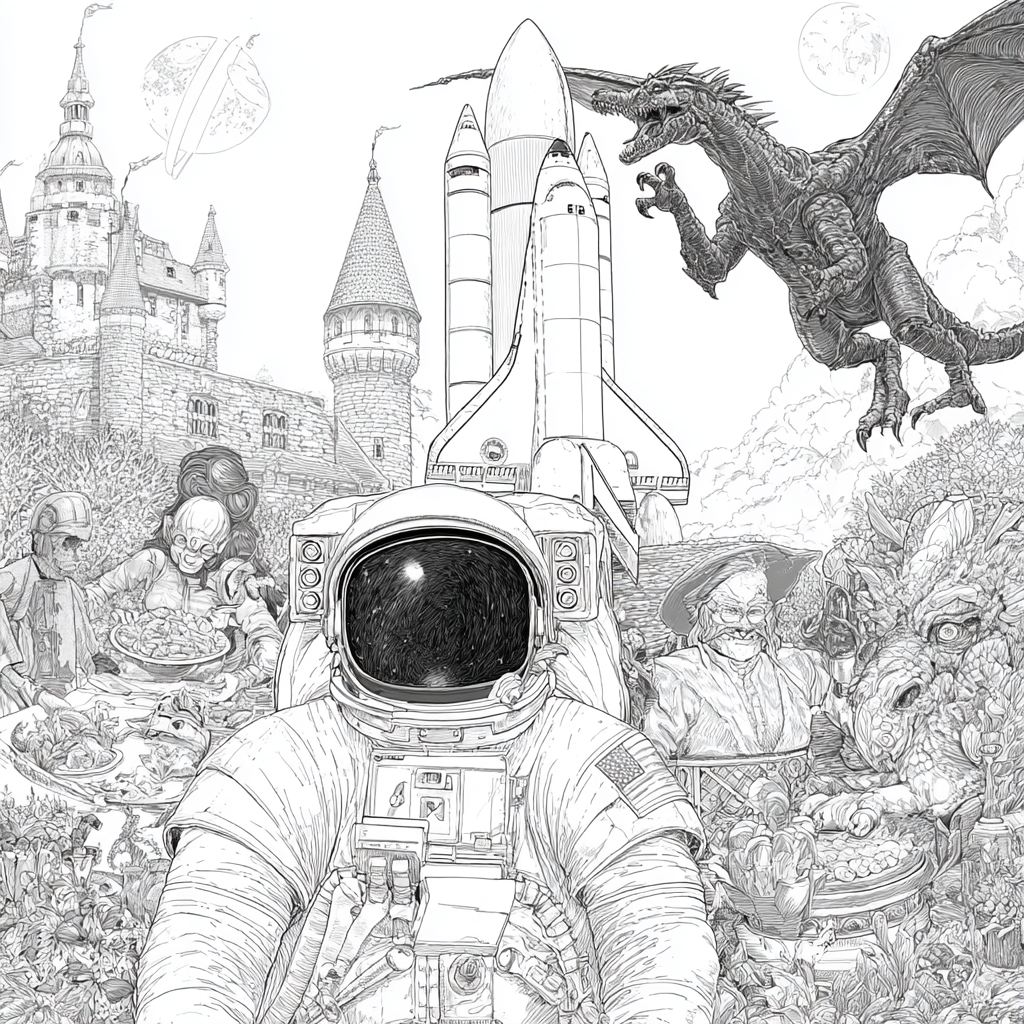
A vibrant collage of fiction genres: astronaut in spaceship for sci-fi, knight in castle for historical, family dinner for realistic, wizard battling dragon for fantasy
Lesson Preview · Grades 3-5

Genre and Subgenre Lesson

Skill: Genre and Subgenre

This lesson explains the five major literary genres — fiction, nonfiction, folklore, drama, and poetry — and then dives into some of the subgenres. Students learn to identify and distinguish subgenres like science fiction, mystery, historical fiction, biography, autobiography, informational text, fable, fairy tale, myth, legend, and tall tale. After the lesson, students practice classifying a variety of texts by genre and subgenre. Available at three reading levels for grades 3–12.

Ad 728x90
Genre
Genre = Category
  • Subgenre
  • Subgenre = Category within a category
  • Example
  • A BANANA → is a FOOD → is a FRUIT.
  • Harry Potter → is FICTION → is FANTASY.
Genre Overview
The 5 Main Genres
  • Fiction - Creative or imaginative writing; made up.
  • Nonfiction - Writing that is true or factual.
  • Folklore - Stories once passed down orally (by word of mouth).
  • Drama - A play or script.
  • Poetry - Writing that is concerned with the beauty of language.
  • Let's look at each of these more closely...
Subgenres of Fiction
An Overview
  • Realistic Fiction
  • Historical Fiction
  • Science Fiction
  • Fantasy
  • Let's look at each of these a little closer.
Realistic Fiction
Stories that could be true but aren't.
  • Key Clues
  • Everyday settings, relatable problems, no magic/aliens/historical anchors.
  • Examples
  • The Missing Blue Binder by Elena Cruz
  • Leo lost his binder. Now he needs to find it before the final bell rings or he may fail science class.
  • Bench Warmer by Corey Fukuda
  • Marcus loses his spot on the basketball team. He wants to get it back, but first he has to admit that he needs to practice more.
Historical Fiction
A made-up story set around a real event or person from history
  • Key Clues
  • Specific dates or eras and real wars or events from the past.
  • Examples
  • Letters to Kevin by Anika Brown
  • Billy's older brother Kevin was drafted to fight in the war in Vietnam. Billy was counting on Kevin to teach him to pitch. Now he doesn't know when he will ever see Kevin again. And the only way the two brothers can stay connected is by writing letters.
  • One Window Seat by June Collins
  • The year is 1955. A boy named Caleb is taking the bus home. He watches as a brave woman named Rosa Parks refuses to give up her seat. Soon Caleb finds himself right in the middle of some important events.
Science Fiction
Has aliens, advanced technology, or is set in outer space or the future
  • Key Clues
  • Futuristic dates, space travel, alien species, and advanced technology
  • Examples
  • The Red Dust Rescue by Mia Hart
  • In 2145, Tori lives on Mars. When a dust storm breaks the station’s life support system, she and her helper robot must fix it before everyone runs out of clean air.
  • The Robot Who Forgot by Amy Cho
  • In the year 2350, a small robot named Blix wakes up in a junkyard. He can't remember who built him. He only knows one thing: he has to get back to the space station before it leaves without him.
Fantasy
Has monsters, magic, or characters with superpowers
  • Key Clues
  • Spells, dragons, monsters, or magical realms
  • Examples
  • The Moonlight Map by Kara Wynn
  • Lena finds a map that glows at night and leads her to a forest where trees whisper and a fox can talk. To save the woods, she must return a stolen spell book before dawn.
  • The Girl with Glass Wings by Petra Nolan
  • Suki finds out she can fly on her tenth birthday. Her wings are clear like glass, and only she can see them. But when a shadowy creature starts stealing the town's colors, Suki might be the only one who can stop it.
Subgenres of Nonfiction
An Overview
  • Informational Writing
  • Persuasive Writing
  • Autobiography
  • Biography
  • Let's look at each of these a little more closely.
Informational Writing
Gives facts, explains, teaches
  • Key Clues
  • Textbooks, cookbooks, how-to guides, reference materials; explains, describes, or teaches something
  • Examples
  • Beavers at Work by Dr. Howard Cole
  • This book teaches how beavers build dams in the water. It includes real photos and facts.
  • 101 Soups by Nora Sanders
  • This text teaches readers how to make over one hundred unique soups. Learn to make French onion, chicken noodle, vegetable, and more!
Persuasive Writing
Tries to influence or convince the reader
  • Key Clues
  • Argues, tries to convince, uses words like "should" or "must," asks readers to take action
  • Examples
  • Make Recess Longer by Jenna Brooks
  • Jenna says kids should have more recess. She argues that physical movement helps kids learn. She ends the essay by asking readers to sign her petition.
  • We Need a School Garden by Lily Sandoval
  • Lily thinks that her school should build a garden. She gives three reasons why it would help students learn. Then she asks readers to sign up to help plant the first seeds.
Autobiography
One's life story written by oneself
  • Root Words
  • AUTO = self | BIO = life | GRAPHY = writing
  • Examples
  • A Tale of Two Kitchens by Rosa Herrera
  • Rosa Herrera tells the true story of her own life. "I grew up cooking in two kitchens," she writes. She tells readers about how she learned recipes from both of her grandmothers.
  • The Diary of a Young Girl by Anne Frank
  • This book is a true story from Anne's own diary. Anne was a young Jewish girl hiding from the Nazis during World War II. She wrote about her family, her fears, and her hope for a better future.
Biography
A person’s life story written by someone else
  • Root Words
  • BIO = life | GRAPHY = writing
  • Examples
  • The General Who Became President by Karen Whitmore
  • This book, written by Karen Whitmore, tells the true story of George Washington. He led the American army during the Revolutionary War. Then he became the first president of the United States.
  • The Apple Tree Moment: The Isaac Newton Story by Brian Holloway
  • This book, written by Brian Holloway, is about Isaac Newton's life. Newton was a curious boy who loved to figure out how things worked. He grew up to discover some of the biggest ideas in science, like why things fall to the ground instead of floating away.
Folklore
Stories passed down by telling and retelling
  • Part of the oral tradition
  • Usually teach a lesson or explain something
  • "RETOLD BY," "ADAPTED BY," and "UNKNOWN"
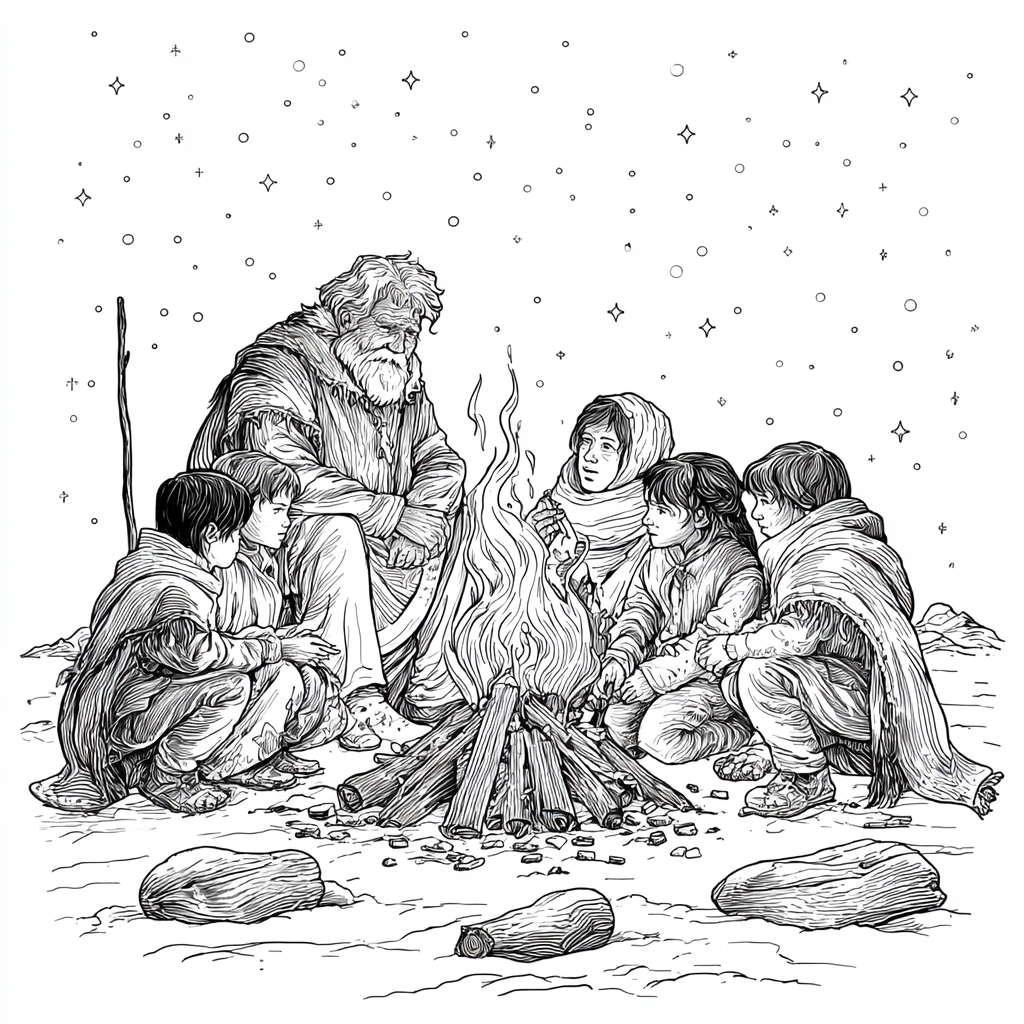
A family clan huddled by a campfire under starry skies, grandfather recounting a tale to grandchildren and relatives, dramatic shadows from flames highlighting intent faces and woven blankets.
Subgenres of Folklore
An Overview
  • Fable
  • Fairy Tale
  • Tall Tale
  • Legend
  • Myth
  • Let's look at each of these a little more closely.
Fable
Very short story with talking animals and a clearly stated moral
  • Key Clues
  • Very short; animals act and speak like humans; ends with a clearly stated lesson
  • Examples
  • The Tortoise and the Hare retold by Nina Solis
  • A Hare makes fun of a Tortoise and challenges him to a race. The Hare runs ahead fast, then decides to take a nap because he is so far ahead. The Tortoise keeps walking at a steady pace. Eventually, the Tortoise crosses the finish line first. Slow and steady wins the race.
  • The Ant and the Grasshopper retold by Marcus Adler
  • All summer, the Ant works hard storing food. The Grasshopper just sings and plays. When winter comes, the Ant has plenty to eat. The Grasshopper has nothing. Prepare today for the needs of tomorrow.
Fairy Tale
Has magic, monsters, and/or talking animals
  • Key Clues
  • “Once upon a time,” human main character, magic and monsters
  • Examples
  • Goldilocks and the Three Bears retold by Catherine Marsh
  • Once upon a time, a girl named Goldilocks walks into a house in the woods. No one is home. She eats some porridge, sits in some chairs, and falls asleep in a little bed. When the three bears who live there come back, they find her and she runs away.
  • Cinderella adapted by Rosa Vidal
  • Once upon a time, a girl named Cinderella was living with her wicked stepmother and stepsisters. They made Cinderella do all the work and never let her have any fun. One night, a fairy uses magic to give Cinderella a fancy dress and glass slippers. Cinderella goes to the prince's ball. At midnight, the magic wears off and she runs home. The prince finds her glass slipper. He uses this to find her. They live happily ever after.
Tall Tale
Funny stories set in the Wild West where the main character's size or skill is greatly exaggerated
  • Key Clues
  • American frontier setting and humorous exaggeration
  • Examples
  • Paul Bunyan and the Great Lakes retold by Gerald Hawkins
  • Paul Bunyan was the biggest, strongest lumberjack who ever lived. He was so strong that he could pull a river straight. Paul once dragged an entire forest out of the ground to clear a path to his camp. He was so large that his footprints filled with rainwater and became lakes. Many people believe that is how the Great Lakes were formed.
  • Pecos Bill and the Tornado retold by Donna Whitfield
  • Pecos Bill was the toughest cowboy in the whole Wild West. He was raised by coyotes and could ride anything with legs, or without. One day, a giant tornado tore across Texas. Bill jumped on it like a bucking bronco and rode it all the way to California.
Legend
A story based on a real person or place that might be true but is exaggerated
  • Key Clues
  • Based on a real figure, facts stretched beyond nonfiction, tone is serious
  • Examples
  • 300 retold by Anton Christou
  • Leonidas the king of Sparta led 300 soldiers to block a giant Persian army. The Persians had hundreds of thousands of men. But Leonidas and his 300 soldiers would not move. They fought for days in a narrow mountain pass. The size of the Persian army meant nothing in this narrow pass. Leonidas and his men cut down tens of thousands of Persians. This small force saved Sparta.
  • Robin Hood and the Silver Arrow adapted by Margaret Ashford
  • People say that a man named Robin Hood lived in Sherwood Forest long ago. He was the best archer anyone had ever seen. He stole money from rich people and gave it to the poor. The Sheriff of Nottingham tried to catch him many times, but Robin always got away. No one knows for sure if Robin Hood was a real person, but the forest is real.
Myth
Has gods and goddesses; may explain the creation of something
  • Key Clues
  • Gods/goddesses, origin/creation explanations, ancient cultures
  • Examples
  • Persephone and the Seasons adapted by Daniel Okoro
  • The Greek goddess Demeter loved her daughter Persephone more than anything. One day, the god of the underworld stole Persephone. Demeter was so sad that she made all the plants stop growing. The other gods came together and made a deal. Persephone was allowed to come home for part of the year. While she is home, Demeter is happy and plants grow. When she leaves, winter comes. That is how the Greeks explained the seasons.
  • Ra and the First Morning retold by Farah Sayed
  • The ancient Egyptians believed that in the beginning, there was only dark water everywhere. Then the great god Ra rose up out of the water. He was so bright that light filled the sky for the first time. Ra spoke the names of things, and they became real. He said "earth," and there was earth. He said "sky," and there was sky. That is how the ancient Egyptians believed the world began.
Drama
Stories written in script form; meant to be performed
  • Key Clues
  • Looks like a script: character names followed by lines.
  • Examples
  • Juliet: O Romeo, Romeo! wherefore art thou Romeo?
  • Hamlet: To be, or not to be: that is the question
Subgenres of Drama
Comedies and Tragedies
  • Comedies
  • Things go poorly for most of the story but it ends happily.
  • Tragedies
  • Things go well for most of the story but it ends terribly.
  • Comedies = Weddings | Tragedies = Funerals
Poetry
Writing that is concerned with the beauty of language
  • There are many subgenres of poetry.
  • Forms: haikus or sonnets
  • Techniques: rhyming or rhythm
  • Poetry is a main literary genre.
Commonly Confused Subgenres
Some Tips and Tricks
  • Fairy tale and Fantasy
  • Fable and Fairy Tale - Look at the ending
  • Tall Tale and Legend - Consider the tone
  • Legend and Historical Fiction - Look at the author
  • Biography and Autobiography - Look at the author
  • Science Fiction and Fantasy - Look at the setting
In Review
  • There are 5 main genres.
  • Identify the main genre first, then look for clues to identify the subgenre.
  • Look at the author credit line!