Skill: Genre and Subgenre

Genre and Subgenre

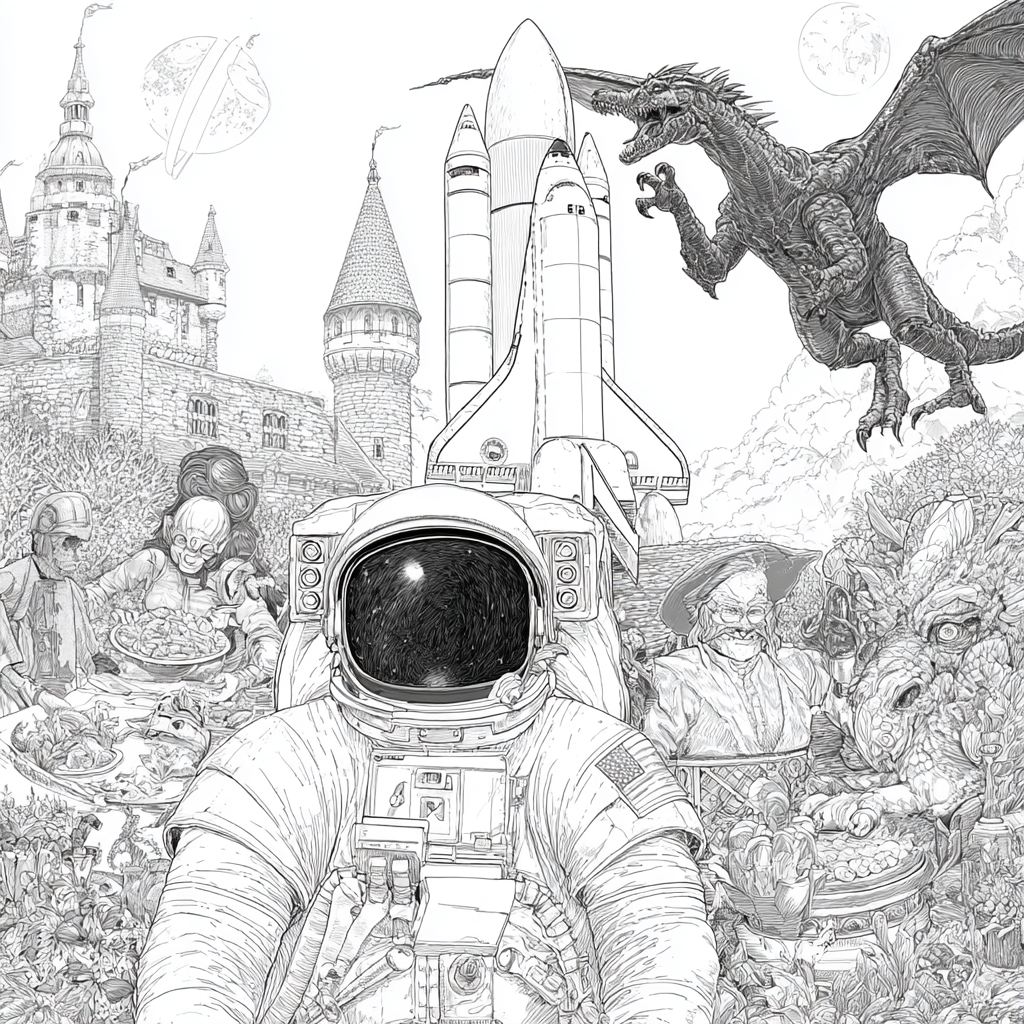
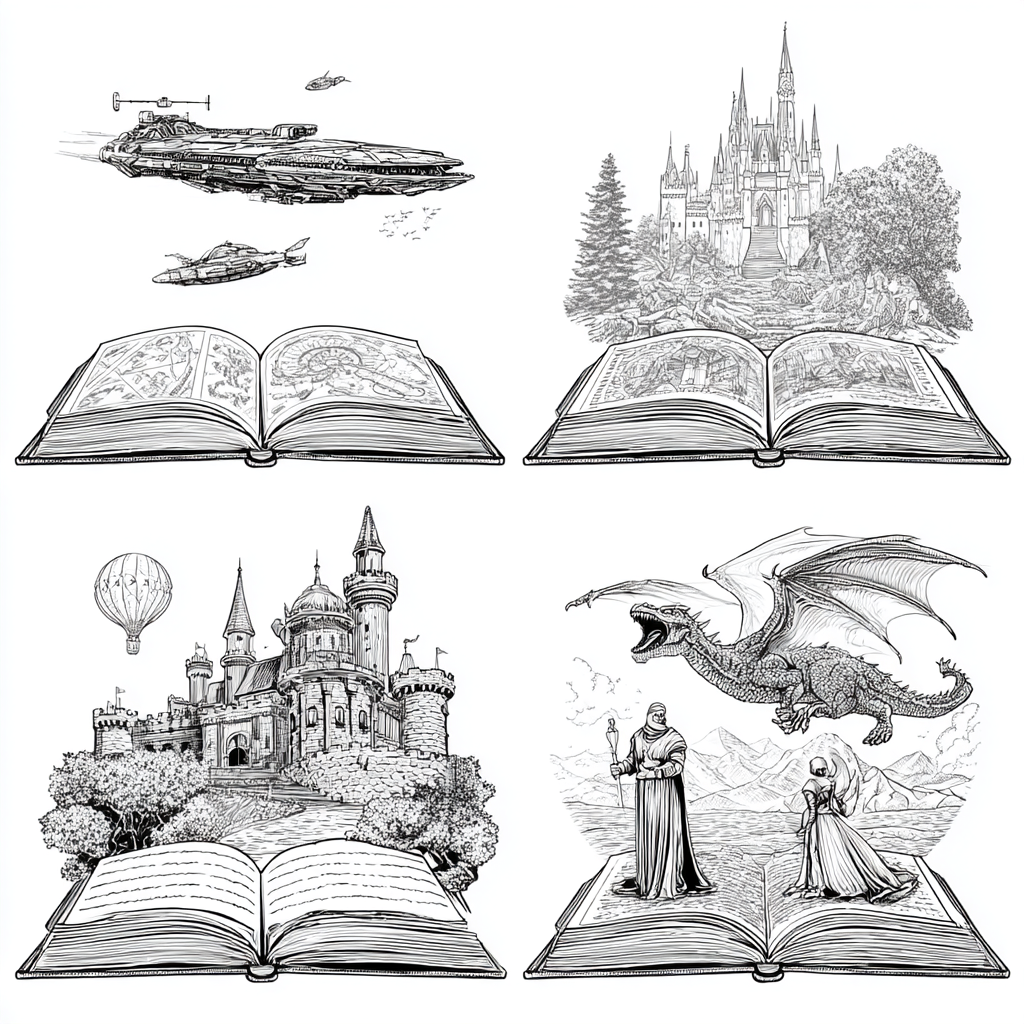
A vibrant collage of fiction genres: astronaut in spaceship for sci-fi, knight in castle for historical, family dinner for realistic, wizard battling dragon for fantasy

Literary genre is the category a text belongs to based on its style, content, and purpose. Texts are grouped into genres and subgenres. A genre is the broad category, while a subgenre is a more specific type within that category.

Fiction — Creative or Imaginative Writing

  • Realistic Fiction: stories that could happen in real life but are made up. They feature everyday settings and problems with no elements of fantasy, magic, or futuristic technology.
  • Historical Fiction: a made-up story set during a real time period in history, often featuring real events or historical figures alongside fictional characters.
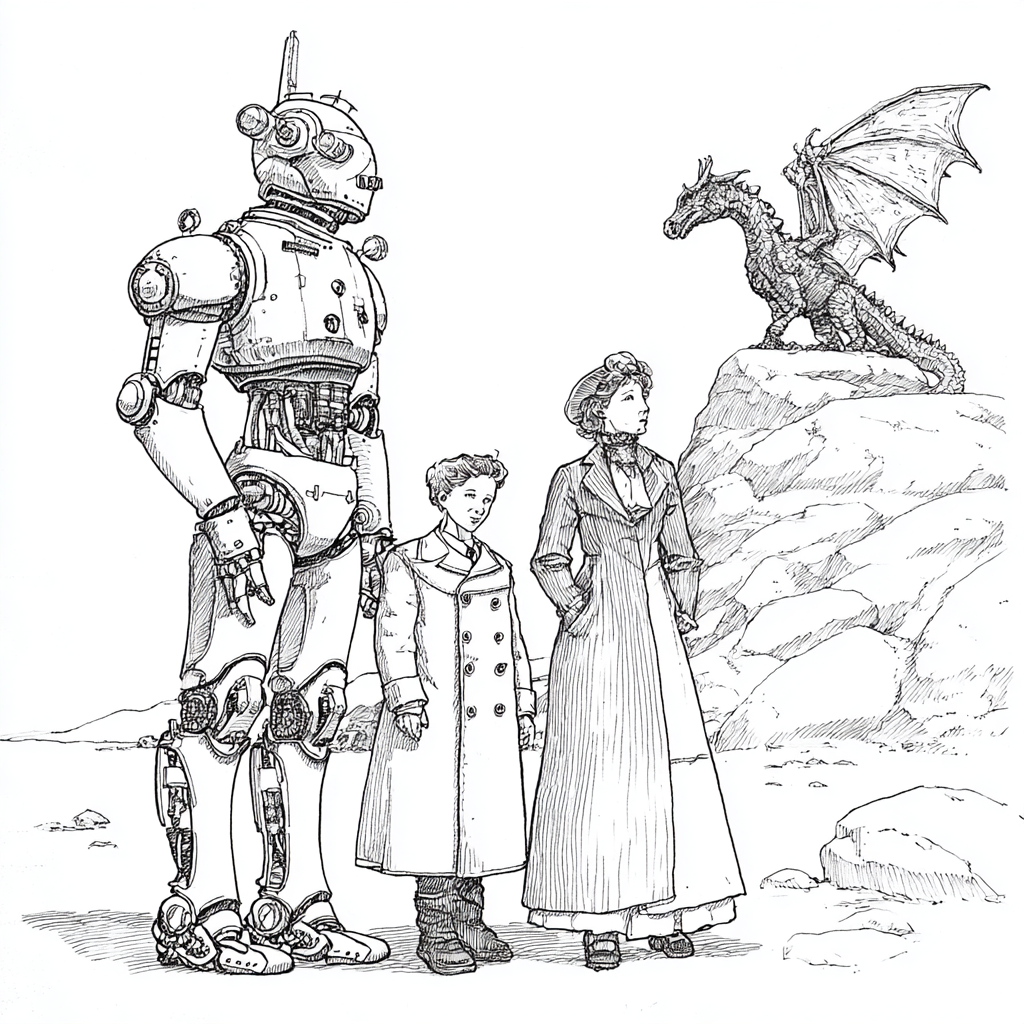
  • Science Fiction: stories that feature futuristic technology, space travel, aliens, robots, or advanced scientific concepts, often set in the future.
  • Fantasy: stories that include magic, monsters, superpowers, or enchanted worlds that could not exist in real life.

Nonfiction — Writing That Is True or Factual

  • Informational Writing: text that provides facts, explains a topic, or teaches the reader something, such as textbooks, articles, and how-to guides.
  • Persuasive Writing: text meant to influence the reader by arguing a position and encouraging them to think, feel, or act a certain way.
  • Biography: the true story of a person's life written by someone else.
  • Autobiography: the true story of a person's life written by that person. (Think: auto = self, bio = life, graphy = writing.)

Folklore — Stories Once Passed Down by Word of Mouth

  • Myth: ancient stories featuring gods and goddesses that often explain how something in the natural world was created.
  • Fairy Tale: traditional stories with magic, enchantment, and often royalty, typically passed down through oral tradition and retold over generations.
  • Legend: a story based on a real person or place that has been exaggerated over time; told seriously, as though it might be true.
  • Tall Tale: a humorous story, often set on the American frontier, featuring a larger-than-life character whose strength, size, or skills are wildly exaggerated for comedic effect.
  • Fable: a very short story in which animals act and speak like people, ending with a clearly stated moral or lesson.

Interactive Lessons

Slide decks

Interactive Activities

Practice sets

Standards & Objectives

Learning Objectives

  • Identify the genre and subgenre of a text based on its content, structure, and style.
  • Distinguish between fiction, nonfiction, and folklore using key textual clues.
  • Explain the defining characteristics of common subgenres and how they differ from one another.
  • Support genre classifications with specific evidence from the text.

Standards Alignment

Common Core (CCSS)
CCSS.ELA-Literacy.CCRA.R.5Open

Analyze the structure of texts, including how specific sentences, paragraphs, and larger portions of the text (e.g., a section, chapter, scene, or stanza) relate to each other and the whole.

CCSS.ELA-Literacy.CCRA.R.9Open

Analyze how two or more texts address similar themes or topics in order to build knowledge or to compare the approaches the authors take.

Show standards (12)
Reading Literature (RL)
Craft and Structure
Grade 3
  • RL.3.5 Refer to parts of stories, dramas, and poems when writing or speaking about a text, using terms such as chapter, scene, and stanza; describe how each successive part builds on earlier sections.
Grade 4
  • RL.4.5 Explain major differences between poems, drama, and prose, and refer to the structural elements of poems (e.g., verse, rhythm, meter) and drama (e.g., casts of characters, settings, descriptions, dialogue, stage directions) when writing or speaking about a text.
Grade 5
  • RL.5.5 Explain how a series of chapters, scenes, or stanzas fits together to provide the overall structure of a particular story, drama, or poem.
Grade 6
  • RL.6.5 Analyze how a particular sentence, chapter, scene, or stanza fits into the overall structure of a text and contributes to the development of the theme, setting, or plot.
Grade 7
  • RL.7.5 Analyze how a drama's or poem's form or structure (e.g., soliloquy, sonnet) contributes to its meaning
Grade 8
  • RL.8.5 Compare and contrast the structure of two or more texts and analyze how the differing structure of each text contributes to its meaning and style.
Integration of Knowledge and Ideas
Grade 3
  • RL.3.9 Compare and contrast the themes, settings, and plots of stories written by the same author about the same or similar characters (e.g., in books from a series)
Grade 4
  • RL.4.9 Compare and contrast the treatment of similar themes and topics (e.g., opposition of good and evil) and patterns of events (e.g., the quest) in stories, myths, and traditional literature from different cultures.
Grade 5
  • RL.5.9 Compare and contrast stories in the same genre (e.g., mysteries and adventure stories) on their approaches to similar themes and topics.
Grade 6
  • RL.6.9 Compare and contrast texts in different forms or genres (e.g., stories and poems; historical novels and fantasy stories) in terms of their approaches to similar themes and topics.
Grade 7
  • RL.7.9 Compare and contrast a fictional portrayal of a time, place, or character and a historical account of the same period as a means of understanding how authors of fiction use or alter history.
Grade 8
  • RL.8.9 Analyze how a modern work of fiction draws on themes, patterns of events, or character types from myths, traditional stories, or religious works such as the Bible, including describing how the material is rendered new.

Copyright 2010. National Governors Association Center for Best Practices and Council of Chief State School Officers. All rights reserved.

Discussion

No comments yet. Be the first to share feedback.

Leave a Comment

Max 2000 characters
Comments are moderated before appearing.